The Pre-Season Habits That Make Hunting Days Run More Smoothly: What to Check First
The overlooked pre‑season hunting work is often the failure to check the rifle bow or pack. The work that is left for the night before includes confirming access, reviewing rules replacing weak batteries and finding a safe place to practice.
A few hours early can prevent a wasted morning, a safety mistake or unnecessary pressure on ground that needs a break. The approach is simple: verify what has changed test what you own and make decisions that leave the habitat and season in better shape.
Start with rules, access and permissions
Regulations decide which equipment is legal which animals and seasons apply, where you may hunt and what reporting or tagging follows a harvest. Check guidance from the relevant state wildlife agency before traveling or practicing under outdated assumptions. Pay attention to county or zone differences, public‑land restrictions, hunter education requirements and special permit conditions.
Access deserves the attention. A familiar parcel may have a gate, boundary, timber operation, leaseholder or landowner request that affects entry. Keep written permission where required, confirm the route and do not treat an old map pin as proof that access remains available. If a property is shared with farmers, hikers or other hunters decide where vehicles will go and how people will identify themselves safely.
Scout for information not animals
Scouting should answer practical questions: Where can you enter without crossing sensitive cover? Which trails are used by people, livestock or equipment? Where will wind and terrain make a stand ? Are there water sources, bedding cover, mast‑producing trees or recent disturbances worth recording?
Start with maps and aerial imagery then confirm details on foot when conditions allow. Mark parking spots, quiet approaches, legal boundaries, emergency exits and locations with a backstop. Do not assume a promising sign guarantees an ethical setup. Fresh tracks may reflect movement while repeated human traffic can make a location poor even when animals pass through.
Record the date weather, wind direction, access conditions and changes since the visit. Avoid intrusion into bedding areas or nesting cover. Good scouting gathers information while creating as little disturbance as practical.
Make the firearm and archery checks routine
Firearm safety begins before ammunition enters the picture. Inspect the firearm for damage verify that it is unloaded and check the action safety, sling, sights and optics. A loose mount, cracked stock, damaged sling or fogging optic requires repair or replacement not a field workaround. Do not alter safety components. Attempt modifications you cannot evaluate safely.
At an approved range or other lawful practice area confirm that your chosen load or arrow setup performs consistently at distances and from positions you can handle. If the point of impact has shifted,. Diagnose the cause before hunting. For archery equipment inspect strings, cables, serving, rests and broadheads according to the manufacturers guidance. Replace components rather than hoping they last one more trip.
A clean reliable setup is necessary. Familiarity with safe loading, unloading, carrying and storage matters just as much. Review a plan with anyone joining you especially muzzle direction, shot zones and what happens when someone is out of sight.
Use a hunting gear checklist that reflects the day
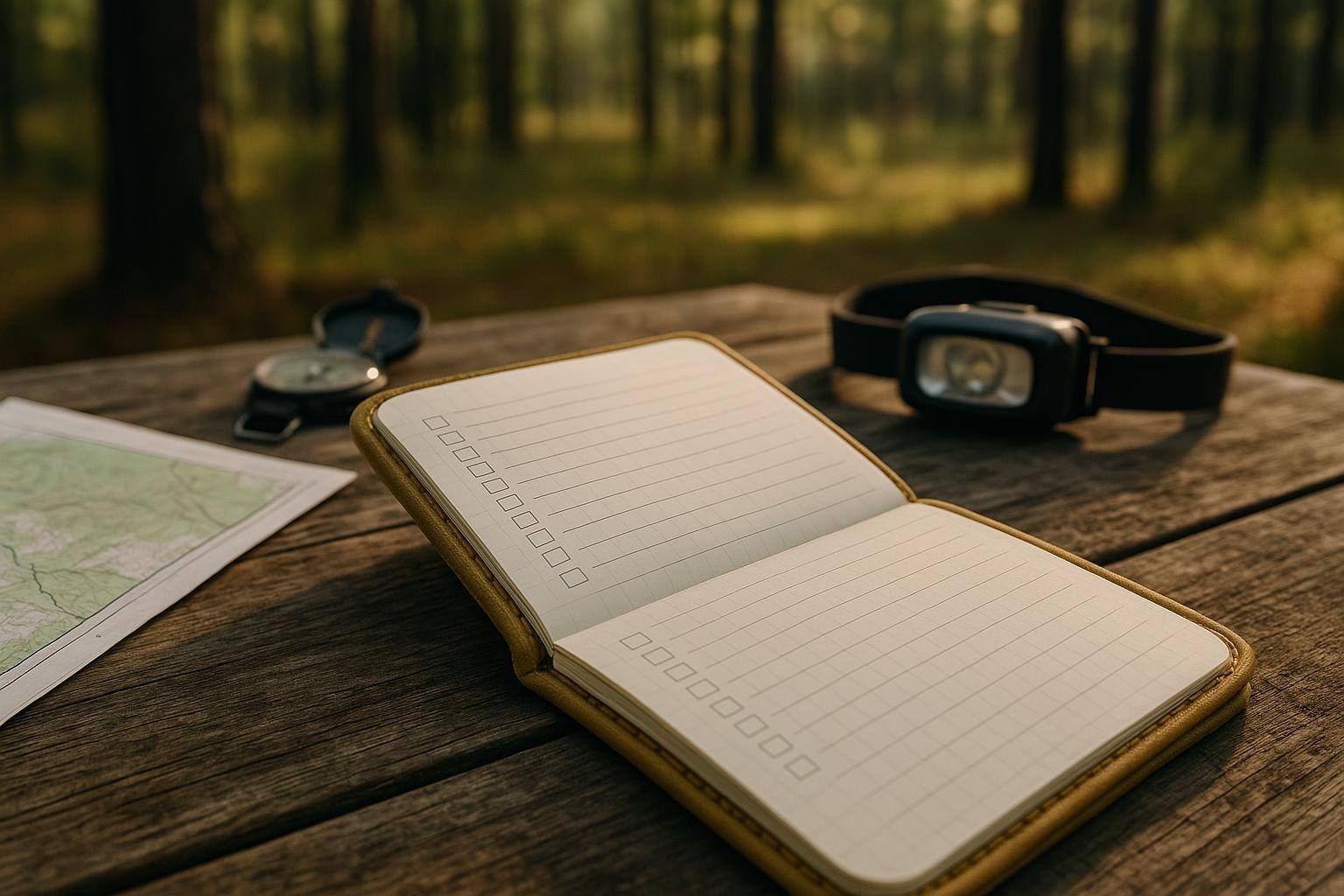
A checklist works best when it is short enough to use and specific enough to catch failure points. Build it around the location, weather, legal method and length of the outing than carrying every possible accessory.
– Current license, permits, tags and a way to complete required reporting
– Legal firearm or archery equipment, ammunition or arrows and a safe transport case
– Weather‑appropriate layers, rain protection, gloves, eye protection and hearing protection where applicable
– Charged phone, backup navigation method, headlamp, spare batteries and a small first‑aid kit
– Water, food, knife, game bags or other lawful field‑dressing supplies and waste bags
– Map with property boundaries, emergency contacts, vehicle keys and a communication plan
– Blaze or other required visibility clothing if the season or location calls for it
Inspect items that fail quietly. Batteries corrode, elastic weakens waterproof coatings wear out and headlamps can switch on inside a pack. Test the system together in light before opening day. If gear is heavy, noisy or complicated enough that you will leave it behind choose an option.
Plan, for weather, transport and recovery
A forecast is useful when it changes your plan. Heat, rain, wind, ice and rising water affect clothing, access, animal recovery, equipment protection and the time you can safely remain outside. Set a point at which you will turn back. Tell someone where you are going when you expect to return and what to do if you miss that check‑in.
Think through the trip not only the stand or blind. Can the vehicle leave if the road becomes soft? Do you have sanitary means to transport game? Will you need help with a load? Identify a place to stop, clean equipment and handle waste without contaminating water or leaving scraps where they create a nuisance.
A recovery plan is part of preparation. If you cannot reasonably retrieve, cool, transport and care for an animal reconsider the location, timing or method before taking a shot.
Leave the ground stronger than you found it
Conservation is field behavior, not a separate exercise. Respect closures, rehabilitation areas, gates and seasonal restrictions. Stay on surfaces when possible avoid damaging young trees and stream banks and remove flagging, tape, shells, packaging and other temporary materials when no longer needed.
Use restraint when conditions are poor. Drought, flooding, wildfire, disease concerns or heavy public use can make an outing even when it is technically allowed. Current agency notices may address those conditions. Can change.
Before leaving home confirm the rules, access, equipment and safety and recovery plan. That discipline reduces rushed decisions. Keeps the focus on responsible time outdoors sound judgment and a resource worth protecting.